From everyday cooking to new industrial applications, used cooking oil can become a resource for fuels, chemicals and materials.
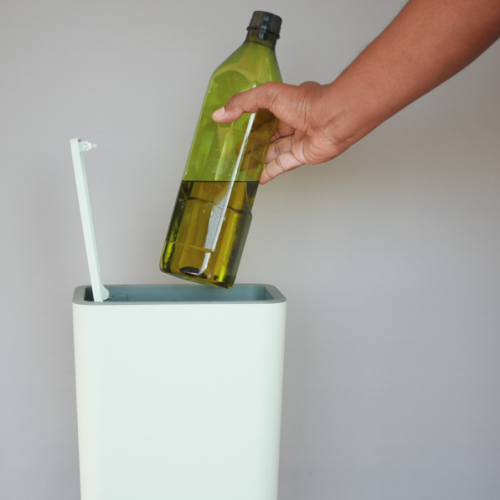
After frying a meal, the oil left behind may seem to have reached the end of its useful life. Yet households, restaurants and food manufacturers generate a waste stream that still contains valuable molecules. Collecting this oil opens the door to new uses while helping prevent the pollution and blocked drains associated with improper disposal.
Once collected, used cooking oil can follow several routes:
- conversion into biodiesel and other transport fuels
- production of soaps and cleaning products;
- transformation into lubricants and ingredients for polymer materials.
Before these transformations can take place, the oil needs to be prepared. Cooking changes its composition, while food residues and water can affect subsequent processing. Filtration removes solid particles, and further treatment reduces moisture or unwanted compounds according to the intended application. The quality of the oil also depends on its original composition and how it was used.
When used oil becomes a material
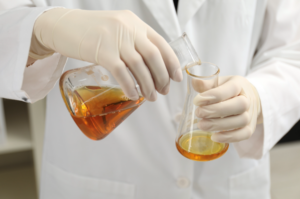 Among these possible second lives, polymer production is attracting research interest. Used cooking oil can be chemically modified to produce polyols, ingredients used to make polyurethanes. This family of materials includes flexible foams for cushioning, rigid foams for insulation and structural applications, and coatings and adhesives.
The transformation involves the chemical functionalization of the triglyceride molecules (principal components of the oil) to introduce active reactive sites (such as hydroxyl groups) enabling subsequent covalent bonding with co-reactants to form polymer chains or a network. For instance, by tailoring the stoichiometry and the cross-linking density of the formulation, researchers can control the cellular morphology, mechanical properties, and firmness of the resulting foam.
Processing conditions also matter. Oil-derived polyols can be thick and difficult to mix evenly, and their inherent batch-to-batch variability directly impacts the consistency of the final formulation. Combining ultrasound with intensive mechanical mixing helps overcome these hurdles, producing more uniform structures than conventional mixing in laboratory experiments. Developing useful materials therefore requires attention to both the chemical ingredients and the way they are processed.
HIBISCUS: connecting recovered oil to building applications
HIBISCUS brings this approach into construction by connecting raw material preparation, chemistry, manufacturing and testing. Its planned uses for waste cooking oil include waterproofing membranes, thermal insulation materials, materials for door and window frames, and protective coatings.
The project will work with waste vegetable oils from different food industries. These oils belong to a broader waste stream generated by households, restaurants and fast-food chains. Using oils that have already served their purpose supports the “food first” principle, giving priority to food uses before directing resources towards industrial applications.
According to Zoubir El Hachemi from LEITAT, one of the main challenges in valorising used cooking oil for high-performance construction products is overcoming the natural variability of the waste stream. Ensuring a consistent, high-purity raw material through robust pretreatment is essential to meet strict industrial standards for the subsequent polyurethanes’ elaboration.
The first step of the project focuses on preparing a consistent raw material. LEITAT will characterise and pretreat oils, through an optimised methodology combining vacuum filtration, water washing, centrifugation, and decantation, optionally followed by heating to eliminate trace moisture when required. This process targets reducing solid residues and moisture below 1 %, while further investigations focus on employing adsorbents to lower heteroatoms (such as sulfur and phosphorus) and adapting viscosity for specific applications. LEITAT and CNRS will then develop chemical transformations to obtain polyols suited to the different applications.
Several complementary routes will connect the treated oil to building products:
- Waterproofing membranes: LEITAT will investigate oil modification to adjust its stability and viscosity. CNRS will develop oil-derived polyols and polyurethane polymers, while SOPREMA will formulate and scale up waterproofing solutions. Pine-derived ingredients supplied by KRATON will also contribute to the biobinder formulations.
- Door and window frames: INDRESMAT will combine LEITAT’s oil-derived polyols with other ingredients to develop rigid polyurethane foams. CELLMAT will help understand and optimise their structure and processing.
- Protective coatings: CNRS will develop polyurethane dispersions for LEITAT to formulate into paints for the frames. VITO will provide lignin for coatings designed to improve water repellence and resistance to soiling.
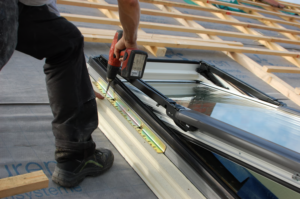 These materials will then move towards prototypes and pilot production. CSTB and Fraunhofer IBP will contribute to assessing performance at building component level, including thermal properties, fire behaviour and durability. Demonstration sites will allow the solutions to be monitored under outdoor conditions.
The project also considers what happens after the materials have served their purpose. Recycling routes will be investigated, while IFEU will lead environmental and circularity assessments across their life cycles. Connecting these stages will help establish where recovered cooking oil can offer a practical contribution to construction, from a kitchen waste stream to a building product and its next possible use.
References
Circular Bio-based Europe Joint Undertaking. (2025). HIBISCUS: Grant agreement no. 101214084 [Unpublished contractual document].
Kumar, A., Bhayana, S., Singh, P. K., Tripathi, A. D., Paul, V., Balodi, V., & Agarwal, A. (2025). Valorization of used cooking oil: Challenges, current developments, life cycle assessment and future prospects. Discover Sustainability, 6, Article 119. https://link.springer.com/article/10.1007/s43621-025-00905-7
Rossi, D., Anguillesi, I., Cappello, M., Dell’Anna, M. M., & Seggiani, M. (2026). Novel synthesis of flexible polyurethane foams with high bio-based content derived from waste cooking oil. Scientific Reports, 16, Article 554. https://www.nature.com/articles/s41598-025-30126-x
Saryanto, H., Rus, A. Z., Saif, Y., Alamsyah, H., & Shaiqah, M. R. (2026). Green intensification of waste cooking oil-based bio-polyurethane foams: Ultrasonic and high-shear mixing for enhanced performance and sustainability. Polymer Bulletin, 83, Article 516. https://doi.org/10.1007/s00289-026-06530-2