Why aren’t bio-based construction materials becoming mainstream ?

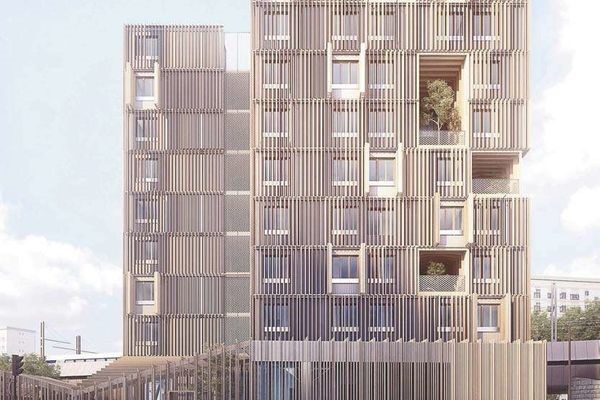
© AAVP Architecture / Romain Ghomari

New research suggests that the biggest barriers are no longer technological.   For years, discussions around bio-based construction materials focused on one question:  Can they really compete with conventional materials?   Today, the answer is increasingly yes.   Engineered timber, wood fibre insulation, cellulose insulation, bio-based polyurethanes and many other renewable materials have already demonstrated their technical performance in real construction applications. Yet despite growing scientific evidence… Continue reading Why aren’t bio-based construction materials becoming mainstream ?

Sustainable construction in Europe: Can bio-based materials change the game?

The construction sector in Europe: a major industry facing major challenges. The construction sector is one of the pillars of the European economy, but also one of its biggest environmental challenges. A key sector with heavy footprint Construction represents 11.5% of the EU’s Gross Value Added[1], shaping the spaces where we live, work and connect.… Continue reading Sustainable construction in Europe: Can bio-based materials change the game?

HIBISCUS Project Launched: Europe invests in bio-based construction materials for a low-carbon future

The HIBISCUS project has officially launched, marking a major step toward transforming the construction industry through innovative, bio-based materials. Coordinated by SOPREMA and supported by eleven European partners and one affiliated entity , the project aims to reduce dependence on fossil resources and accelerate the shift toward circular, sustainable building solutions. The construction sector is… Continue reading HIBISCUS Project Launched: Europe invests in bio-based construction materials for a low-carbon future

From Renewable Feedstocks to High-Performance Building Materials: Inside the HIBISCUS Innovation Roadmap

HIBISCUS is redefining the future of building envelopes by replacing fossil-based components with next-generation bio-based alternatives. The project’s mission is clear: deploy safer, circular materials at scale while ensuring economic viability and compliance with stringent European standards. A complete european value chain HIBISCUS aims to build a fully integrated European value chain, from feedstock conversion… Continue reading From Renewable Feedstocks to High-Performance Building Materials: Inside the HIBISCUS Innovation Roadmap

KRATON

The University of Cambridge is a world-renowned public research university located in Cambridge, England. Founded in 1209, it is one of the oldest and most prestigious universities globally. Cambridge is composed of 31 autonomous colleges and offers a wide range of undergraduate and postgraduate programs across disciplines such as sciences, humanities, engineering, and social sciences.… Continue reading KRATON

INDRESMAT

The Université Bretagne Sud (UBS) is a multidisciplinary university located in Brittany, France, with campuses in Lorient, Vannes, and Pontivy. It focuses on innovation through research and education, particularly in fields like digital sciences, materials engineering, and environmental studies. UBS collaborates closely with industries and regional partners to drive applied research and technology transfer. With… Continue reading INDRESMAT

CellMat Technologies

UBFC is a public group of institutions, composed among others of UFC – University of Franche‐Comté and ENSMM. These three institutes compose the FEMTO-ST Laboratory which bring together research departments in the areas of mechanics, materials, mechatronics, electronics, acoustics, opto-electronics, energy, and time-frequency systems (micro-chemical gas sensors).  

CNRS

Texteis Penedo is a Portuguese textile company specializing in high-quality home textiles, including jacquard fabrics for curtains, upholstery, and decorative items. Located in the Guimarães region, the heart of Portugal’s textile industry, the company combines traditional craftsmanship with advanced manufacturing technologies. Known for its innovation and sustainable practices, Texteis Penedo collaborates with designers and international… Continue reading CNRS

Université de Strasbourg

The Synchrotron SOLEIL is a French national research facility located near Paris, dedicated to producing and utilizing synchrotron light. This state-of-the-art particle accelerator generates extremely bright X-rays and ultraviolet light used in diverse scientific fields, including materials science, biology, chemistry, and environmental studies. SOLEIL supports cutting-edge research and industrial applications by offering advanced beamlines and… Continue reading Université de Strasbourg

Liège Université

RISE (Research Institutes of Sweden) is Sweden’s national research institute, providing expertise in sustainable development, digitalization, and industry innovation. It collaborates with academia, industry, and the public sector to drive research, testing, and innovation for societal and industrial growth. RISE is headquartered in Gothenburg, Sweden, with additional offices and laboratories spread across the country to… Continue reading Liège Université